
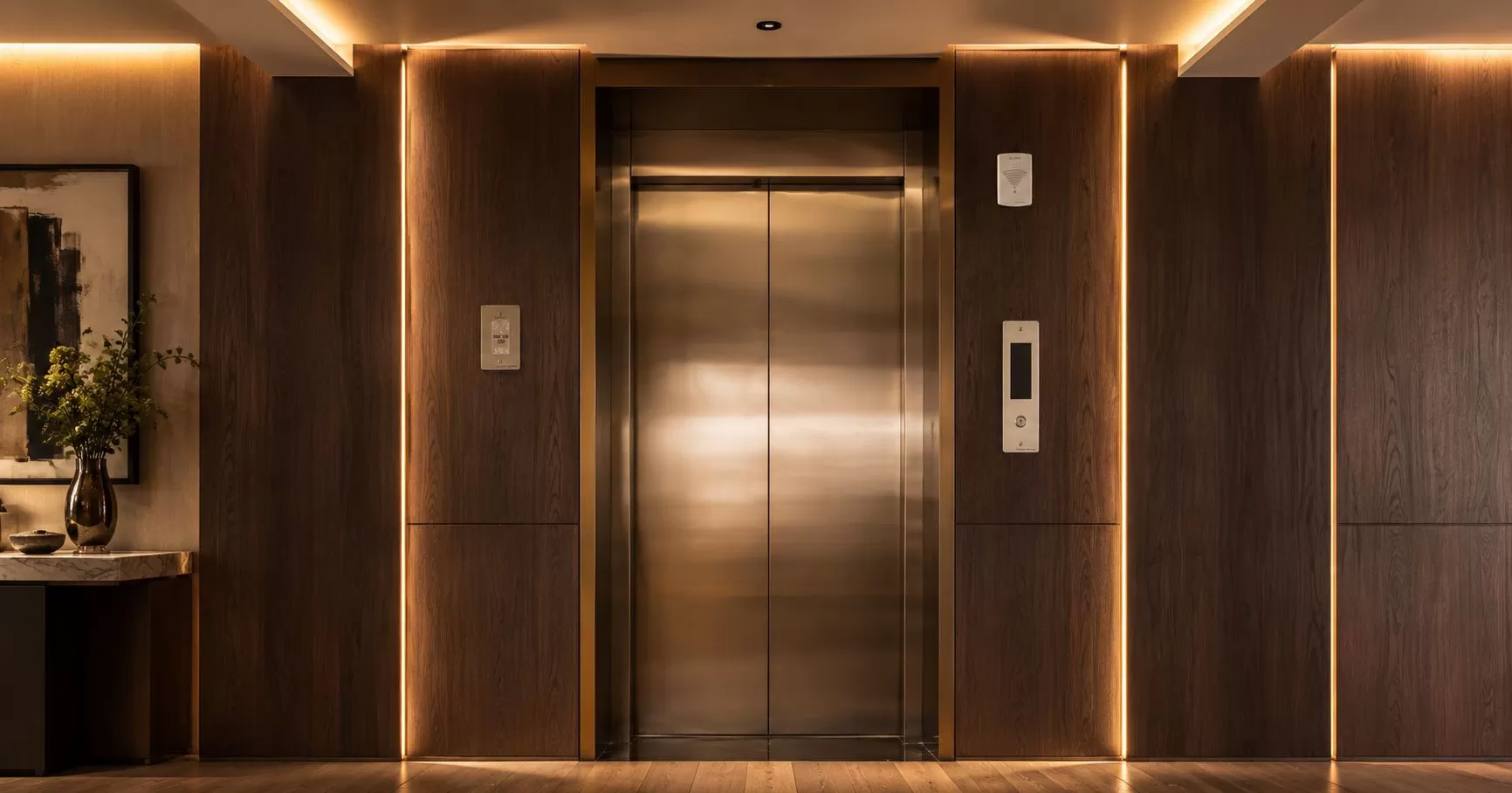
Installing a home lift is one of the best ways to improve accessibility, comfort, and property value. One of the first questions homeowners ask is:
"How much space is required for a home lift?"
The good news is that modern home lifts are designed to fit into compact spaces. Depending on the lift type and cabin size, many home lifts can be installed with a footprint of approximately 1 square meter. However, the exact space requirements depend on the lift model, number of passengers, and installation method.
In this guide, we'll explain everything you need to know before planning a home lift installation.
Minimum Space Required for a Home Lift
Most residential lifts require:
- Minimum floor area: Around 1 m²
- Shaft width: Approximately 900 mm to 1500 mm
- Shaft depth: Approximately 900 mm to 1500 mm
- Pit depth: Varies depending on the lift model
- Overhead clearance: Depends on the lift technology
Modern machine-room-less (MRL) and compact home lifts are specifically designed for homes with limited space.
Factors That Affect Home Lift Space Requirements
Lift Type
Different lift technologies require different installation spaces.
- Hydraulic Home Lift
- Traction Home Lift
- Machine Room Less (MRL) Lift
- Pneumatic Home Lift
Compact lifts generally require less structural modification than traditional elevators.
Cabin Size
A larger cabin increases the shaft dimensions.
Typical options include:
- 2 Passenger Lift
- 3 Passenger Lift
- 4 Passenger Lift
- Wheelchair Accessible Home Lift
Choose a cabin size based on your family's future needs rather than only current usage.
Number of Floors
A lift serving two floors usually requires less construction than one serving three or four floors.
Your installer will calculate:
- Travel height
- Landing openings
- Structural support
Existing House vs New Construction
Installing a lift during construction is usually easier because the shaft can be included in the building design.
Existing homes may require:
- Stairwell installation
- Corner installation
- External shaft
- Structural modifications
Fortunately, many compact lifts are specifically designed for retrofit projects.
Can a Home Lift Be Installed Without a Large Shaft?
Yes.
Many modern home lifts require minimal construction and can be installed without a traditional elevator shaft, depending on the product and installation method.
These systems are ideal for:
- Duplex homes
- Villas
- Independent houses
- Renovation projects
Ideal Locations to Install a Home Lift
The most common installation areas include:
- Stairwell
- Living room corner
- Central lobby
- Balcony area
- External glass shaft
Choosing the right location helps maximize available space while maintaining the home's aesthetics.
How to Measure Space Before Installation
Before selecting a lift:
- Measure the available floor area.
- Identify the number of floors.
- Check ceiling height.
- Evaluate structural support.
- Discuss electrical requirements with the installer.
A professional site inspection ensures accurate planning.
Benefits of Compact Home Lifts
Modern home lifts offer several advantages:
- Suitable for small homes
- Improves accessibility
- Adds convenience
- Enhances property value
- Low maintenance
- Quiet operation
- Energy efficient
- Modern designs
Frequently Asked Questions
What is the smallest space needed for a home lift?
Many compact residential lifts can be installed in approximately 1 square meter, depending on the model.
Can I install a home lift in an existing house?
Yes. Many modern home lifts are designed specifically for retrofit installations with minimal structural changes.
Do all home lifts require a pit?
No. Some lift models require a shallow pit, while others are designed to minimize or eliminate extensive pit construction.
Which home lift is best for small houses?
Machine-room-less (MRL) lifts and other compact residential lift systems are often suitable for homes with limited space, depending on the building layout and requirements.
Does a home lift increase property value?
A well-designed home lift can improve accessibility, convenience, and may increase the appeal and value of a property, especially for multi-storey homes.
Conclusion
Modern home lifts no longer require large amounts of space. With compact designs and advanced engineering, homeowners can install a lift even in homes with limited floor area. The exact space requirement depends on the lift type, cabin size, and building layout, making a professional site assessment essential for selecting the most suitable solution.
At Cooper Elevators, we offer customized home lift solutions designed to maximize space, enhance accessibility, and complement modern homes. Our experts help you choose the ideal lift based on your home's layout, ensuring a safe, efficient, and seamless installation that delivers long-term comfort and reliability.